
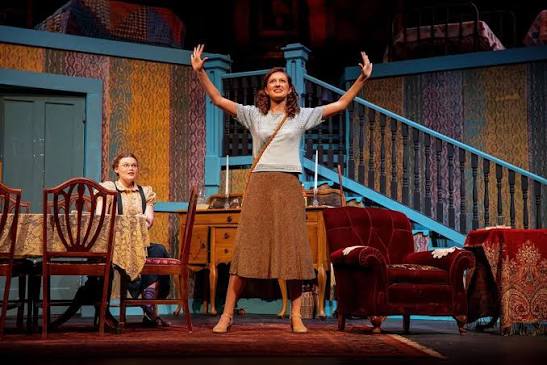
“I’m not going to let you hurt me, Nora. I’m not going to let you tell me that I don’t love you or that I haven’t tried to give you as much as I gave to Laurie…..God knows, I’m not perfect because enough angry people in this house told me so tonight…But I am not going to be a doormat for all the frustrations and unhappiness that you or Aunt Kate or anyone else wants to lay at my feet.”
This is the opening of a monologue I’m learning for my acting class this summer. Blanche, the character from Neil Simon’s play, Brighton Beach Memoirs, is a 38-year-old widow, mother to two daughters, living with her family since the death of her husband six years ago. The words above are directed at her daughter, Nora.
Financially dependent, Blanche is grateful for her family’s help and does her best not to cause trouble. But what makes her a compelling character, especially as a midlife woman, is not just her vulnerability, but the point at which she decides that she can no longer absorb the criticism and humiliation from her family that she has willingly endured out of gratitude. She now understands that she has allowed herself to be treated poorly, allowed herself to be a doormat, and has become almost invisible because of it.
How many women, especially in midlife, have done the same?
We do so, not necessarily because we’re weak, but because we’ve been conditioned to keep the peace, and put everyone’s needs ahead of our own.
Blanche recognizes the emotional cost of that strategy as well as the part she’s played in that dynamic. She ultimately finds her voice and the strength to stand up for herself.
She’s had enough!
Late in the play, after enduring repeated criticism from her brother-in-law Jack, Blanche reaches her limit. She calmly, but firmly, refuses to accept being spoken to with contempt. She tells him that she has had enough. It is the first time she values her dignity over his approval and it’s a pivotal moment.
She simply says, in effect:
“You don’t get to treat me like this anymore.”
She decides her self-respect has value.
What’s interesting is that nothing about her circumstances has changed. She isn’t suddenly wealthy. No one rescues her. What changes is that she decides that her self-respect is important.
Empowerment often begins this way, not with a change in circumstances, but changing what you will tolerate.
Read the full article on Substack.com.
Recent Comments