
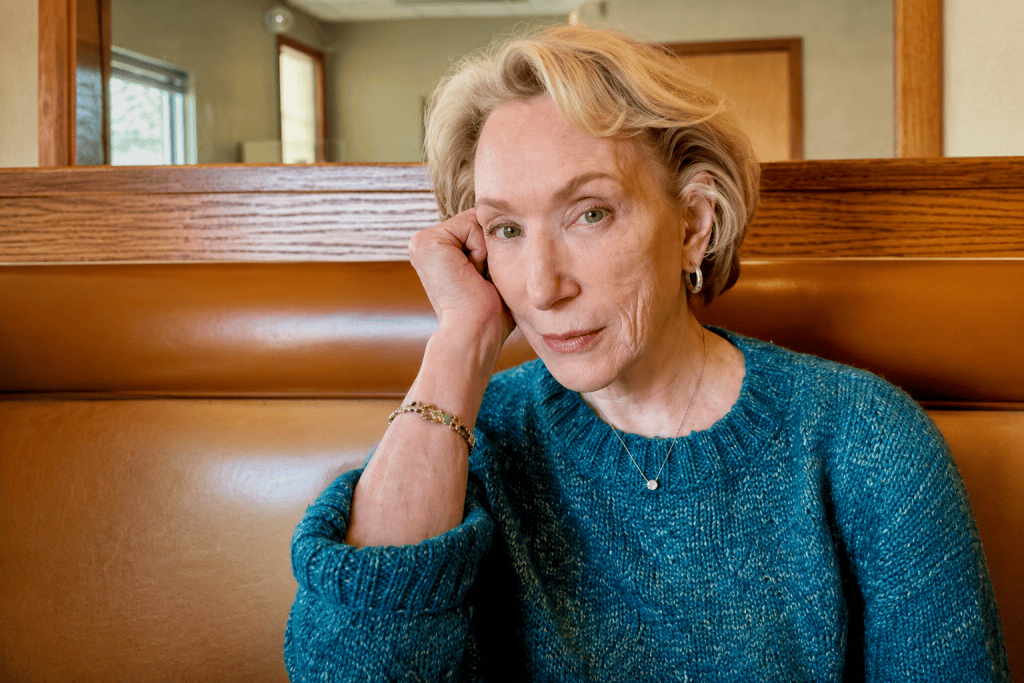
I’m launching a new Badass Women at Any Age interview series on Substack:
My first conversation is with Jaqueline Sussman, whose life’s work has centered on helping women discover the authentic self beneath years of conditioning.
What is your personal story, and how have you arrived where you are today?
My personal story begins in South America. I lived in Venezuela from the age of one to ten. My parents were Holocaust survivors, and from very early on I absorbed something of the magnitude of what they had endured—the devastation of losing family, home, culture, and an entire world, and then having to begin again. Their experience gave me an early sensitivity to suffering, injustice, and man’s inhumanity to man. It also created in me a desire to understand suffering and, eventually, to help heal it.
Growing up in Caracas shaped me in another way. It was a multicultural world filled with people of different races, religions, nationalities, and economic circumstances. There was also visible poverty. I remember the shoeshine boys on the streets and the makeshift homes climbing the mountainsides. I was exposed very young to people whose lives were profoundly different from mine, and this gave me a feeling for our common humanity and a curiosity about what lies beneath our outward differences.
There were also two remarkable messages I received from my parents. When I was in my early teens, my father said, “I see you writing a book one day and putting my name in it.” I eventually wrote two books, and I put his name in both. My mother, in her own way, had a vision that I would one day sit with people and counsel them. That, too, became my life.
I studied psychology, received my master’s degree and professional training, and became a psychotherapist. But beneath the formal path was always the same impulse: to understand what separates human beings from themselves and one another, and what allows us to heal and come together.
Looking back, I can see that the trajectory was there from the beginning. My parents’ survival, the losses they carried, my childhood among many cultures, and my early awareness of injustice all led me toward a life devoted to inner transformation.
What led you to focus on women?
In my twenties, I met Dr. Akhter Ahsen, the originator and leading theoretician of Eidetic Image Psychology. I studied the methodology deeply for many years and eventually became involved in research, teaching, and exploring how eidetic imagery affects personality, relationships, emotion, symptoms, and consciousness.
Over time, I worked with an extraordinary range of people—in individual practice, mixed groups, interfaith and interracial settings, and organizations including Google, Mattel, and UN Women. Again and again, I began noticing particular qualities emerging in women: relational thinking, empathy, playfulness, emotional openness, intuition, and a spontaneous question that appeared repeatedly: How can I make this better? How can I help?
I began to understand that there were forms of power women possessed that our culture did not necessarily teach them to recognize as power.
Then something happened that I can only describe as a profound inner knowing: I understood that my work was to address the wounded feminine. I had never consciously planned this. It came as a very clear sense of purpose.
I began to see how deeply women had been conditioned across generations to doubt their perceptions, mute their voices, accommodate others, mistrust their feelings, or believe that power meant becoming more like the dominant masculine model. These messages are carried through families, cultures, religions, and institutions. They enter the psyche so early that we often mistake them for ourselves.
Yet beneath that conditioning, the authentic Self has never disappeared.
That became the heart of my work: helping women uncover the essential self beneath the inherited self—the intelligence, intuition, creativity, tenderness, fierceness, relational capacity, and authority already there. I came to believe that feminine power does not have to imitate masculine power. A woman becomes extraordinarily powerful when she becomes more completely herself.
Read the full interview on Substack.com
Recent Comments